Store selector: No store selected

Tell us about yourself: “I am retired from the military electronic supplier business, also retired from 9 years of service to the Air Force Reserve/Cadet Instructor Cadre, an airplane builder and generally a tinkerer. I love fixing things.”
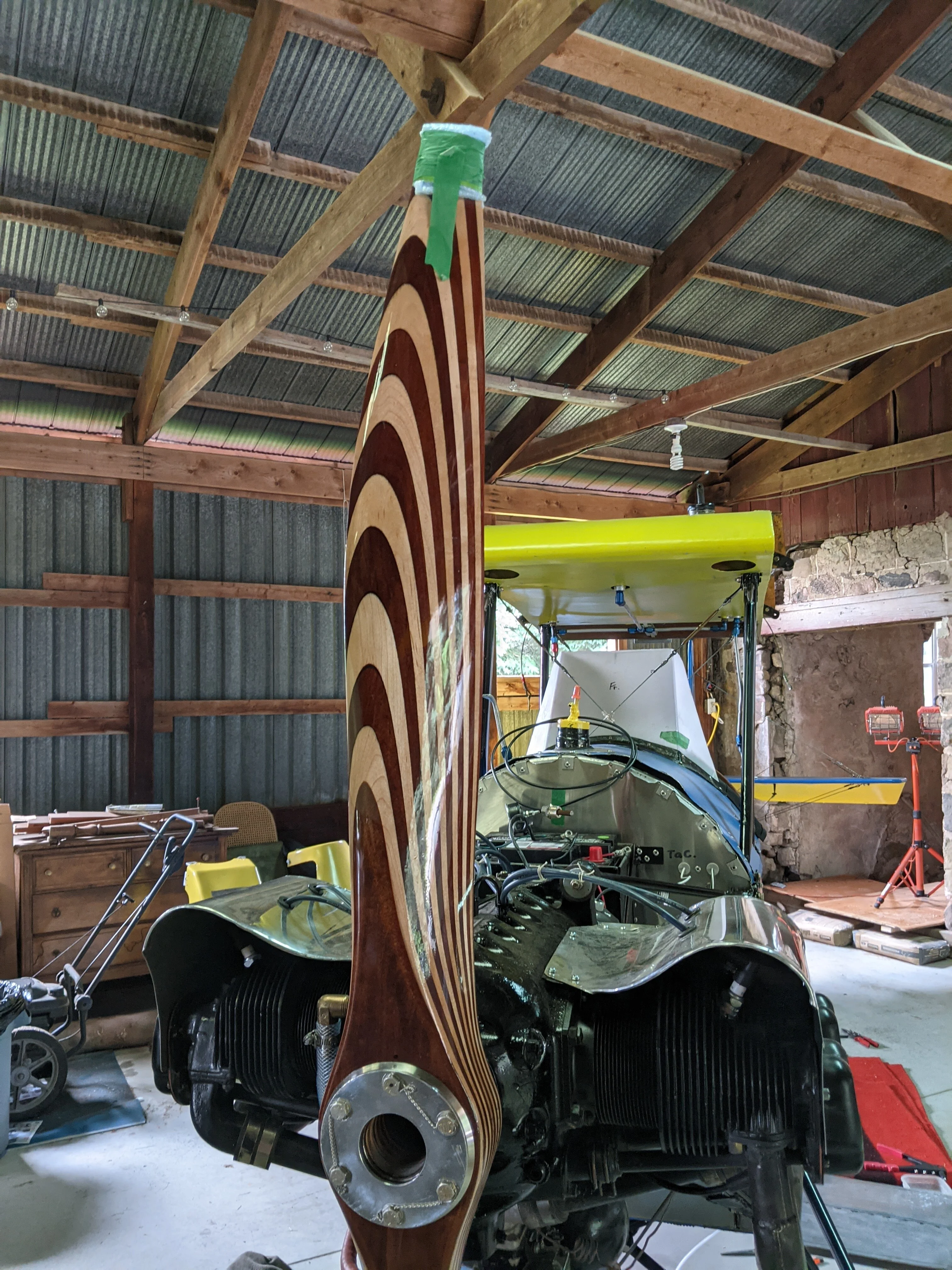
In an age of 3D printers and the accurate results they produce, this is a great example of non-computerized fabrication. The saw blade creates a series of notches of varying depths, gradually “whittling” the excess wood away until the final propeller shape emerges which is then sanded smooth and balanced.
Amazing project, Domenico! Thank you for sharing it with us!
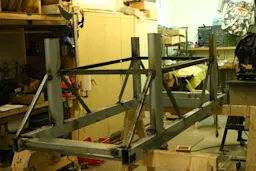
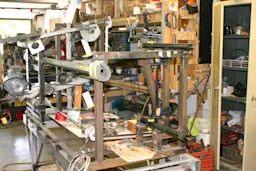
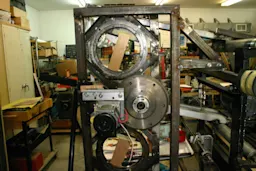
What is it? It is a duplicating/copy machine. It copies a propeller master to make an aviation propeller. The intent was to try and repurpose any material on hand. By material, I meant different woods, such as Rock Maple, Birch, Mahogany, Ash, and Burnt Maple. Usually, it’s Rock Maple. The tip surfaces can be covered with fiberglass, or metal clad.
I built this machine because I needed a propeller for my homebuilt airplane, and with the assistance of a friend who helped with the design, we proceeded to make it a reality. Now I can make propellers for others. It takes 2 days to duplicate, one day/night to glue up a blank, and about 2 weeks to sand, shape the hub by hand, and the balance, and finish (paint/lacquer or marine varnish).
The blank is laminated Rock Maple. I cut slots to save time. The blade cannot handle the sideloads, otherwise. I then knock out the pieces that were notched. I then make a cleaning cut, to get rid of the roughness left over from the notching. I then lower the blade to get closer to the finish depth, and may then need one last cut. It is then repeated on the other side of the blank, and then removed from the machine. I sand off all the saw ridges, then only sand when required to balance the propeller end-to-end. Once balanced I then start to apply the finish, which is also a balancing procedure.
What components are used to perform the work for your project? (e.g. hydraulic cylinder(s), hydraulic motor(s), sprockets, pulleys etc.) Two electric motors controlled by electric switches. Rollers, gears, machine screw, bearings and pulleys. The revolving gears were acquired from Volkswagen ring gears and machined. Some parts came from donated track exercise machines (treadmills) and repurposed. Some steel and welding supplies were purchased from Princess Auto. It took 6 months to build it.
As for automation, a worm drives the saw/follower assembly and at the end of the travel I have a limit switch to shut it down if I'm away (gone for coffee). One travel is one hour. Right now, the worm is extremely slow.
What design/build challenges did you overcome? The challenge was trying to keep the welding from deforming the structure. Calibration to make it run true on center and to make a true copy.
If you had to build it again, what would you do differently? I should have made it a little bigger, longer. The biggest prop I can make on this machine is 78 inches. I have now changed the motor that drives the worm. One hour for one pass was too slow. I've reduced that now to a half hour, and is now direct drive instead of the belt system I had previously.
Which Princess Auto location do you visit most? The Brampton, ON store.