Store selector: No store selected

"I am a semi-retired senior whose interests until now have been camping, fishing, travelling, cars, pickup trucks, and boating on Okanagan Lake."
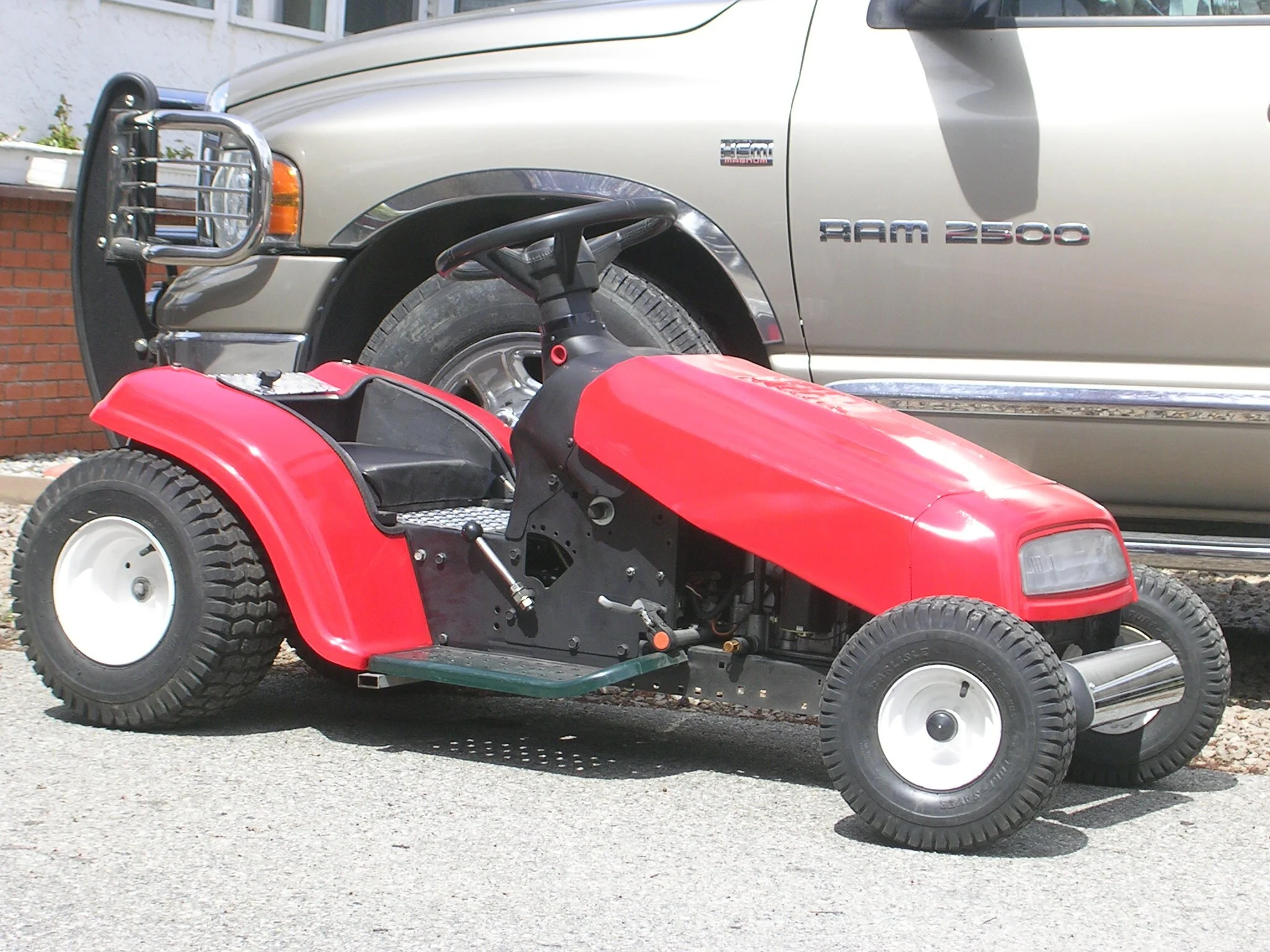
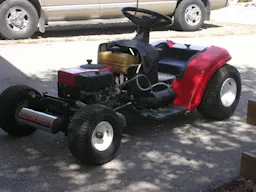
Bob's mower-to-racer conversion project looks like it can kick up some serious dirt. The dropped hood and lowered chassis definitely adds to the racing look. And check out that low seat position... great for keeping the center of gravity in check, but if you sit any lower you're going to need new pants.
Nice work, Bob! Thanks for sharing your project with us!
Q: What is it?
A: This was originally a Craftsman ride-on lawn mower, modified for dirt track racing. I was introduced to lawn mower racing in Grand Forks, BC and a close friend hooked me up with two Craftsman ride-on mowers. As I needed a winter project, one mower was completely torn down, steam cleaned, and built back up to a complete racer. I think the building of the mower is going to be just as exciting as racing it. I am looking forward to meeting with other racers in the near future and learning about the sport.
Q: What is the main power source for your project? (e.g. electric motor, gas engine etc.)
A: Stock 13.5 HP, one cylinder, electric start, non-electronic Briggs and Stratton gas engine.
Q: How do you control your project? (e.g. hydraulic control valve(s), electric switches etc.)
A: Engine power is routed to the 5 speed transaxle via a two belt system of pulleys and belts, and a center mounted jack shaft. Foot throttle is a modified bicycle hand brake and cable. Original dash mounted throttle now controls only the choke. So far, I'm using the stock transaxle braking system which works well.
Q: What components are used to perform the work for your project? (e.g. hydraulic cylinder(s), hydraulic motor(s), sprockets, pulleys etc.)
A: Several pulleys, keyed shafts, two belts, steering rod ends, steering shaft coupling, shift lever direct system rod ends, and heavy duty bronze bushings for axle spindles.
Q: What design/build challenges were overcome?
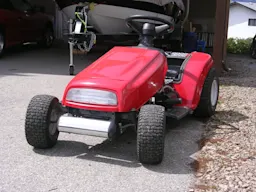
A: Steering system was the first challenge, as I wanted a direct system mounted above the chassis and behind the engine. Several tries were made before adding a bell crank off the steering wheel shaft. It works very well although it has a very tight ratio and steering effort was reduced by adding a larger diameter automotive steering wheel. The curved metal you see behind the left front wheel is actually the exhaust shooting down. The black plastic round tank on the left side footrest is actually a reservoir for crankcase ventilation. It will collect the vapour and it will condense in the tank. One hose comes from the engine crankcase, the other vents to atmosphere. I did this so no oil film would drip on the frame or the ground.
Q: If you had to build it again, what would you do differently?
A: Probably add a handmade front axle mounted in the stock location that would allow the 6 inch drop. This time I used the stock axle, but moved it forward 8 inches and raised it 6 inches. Possibly the use of a steering angle drive that would leave room for the battery mounted behind the engine instead of behind the transaxle. I have three other ride-on mowers to work on different concepts in the future.
Q: Which Princess Auto location do you visit most?
A: Kelowna, B.C.