Store selector: No store selected

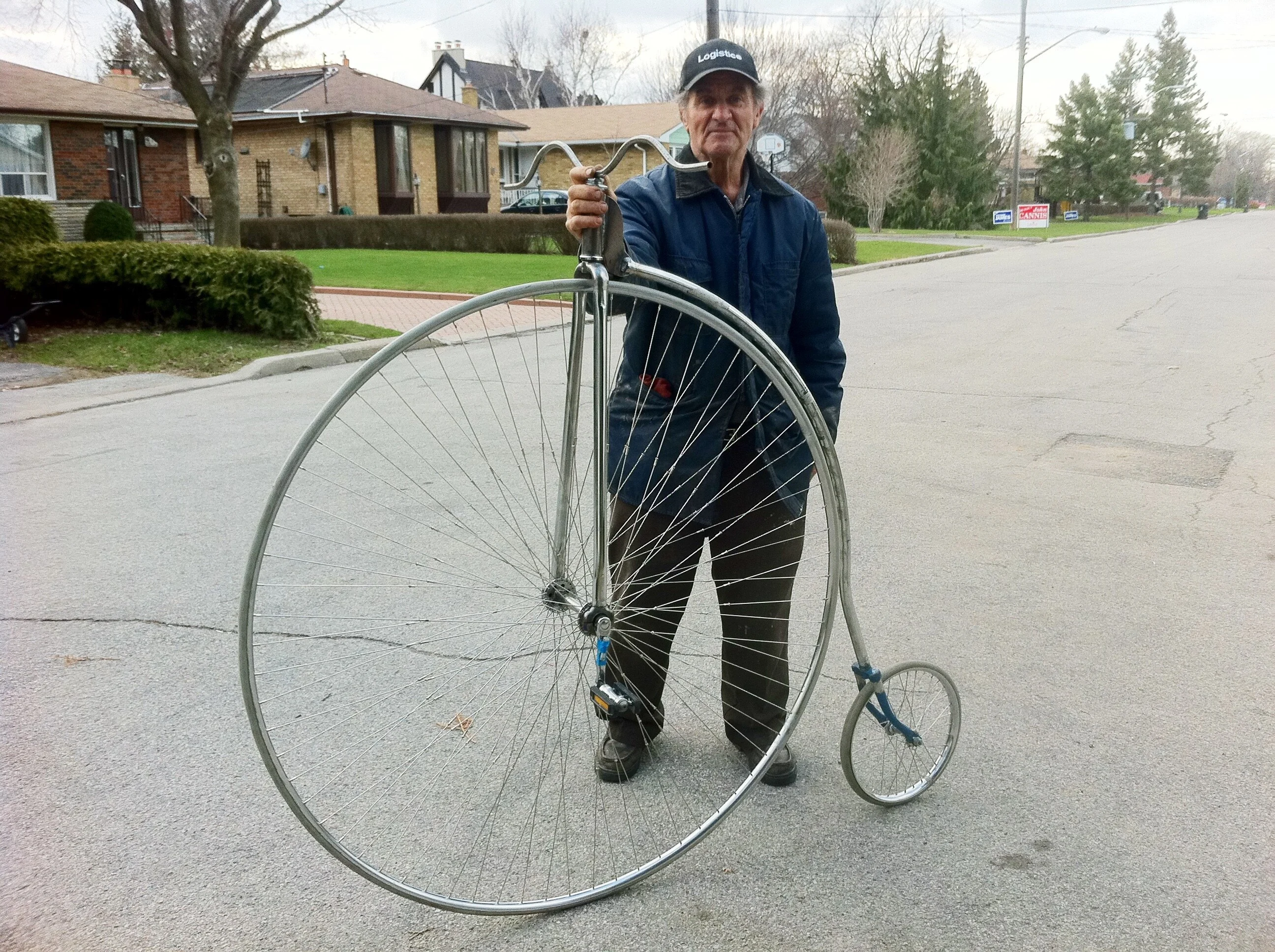
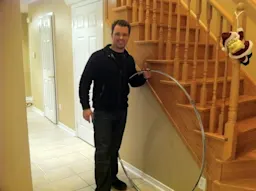
"My father Philip and I are tinkerers, and built this replica Penny Farthing from scratch using a good quality photo we were able to obtain from the Internet, which we scaled off of. We are "Jack of all Trades" kind of guys and love fabricating: there isn't much we cannot fix or make. Whether for a playful toy like this to specialized tools for work, we love spending time in the garage fixing things."
Place a British penny next to the much smaller farthing coin, and you get an idea how this classic bicycle got its name. Jason gave us some interesting facts about the bike:
"The "Penny Farthing" as it has been nicknamed, is the first metal bicycle that dates back to 1860's. The larger wheel at the front was created to achieve maximum circumference. This large wheel allowed the rider to cover a greater distance per revolution. Today's modern bicycles have gears. This design predates the modern chain-and-sprocket gearing systems by about 15-20 years. It just simply had not be invented yet.
The Penny Farthing was used at that time for transportation and for pleasure riding and racing. It has been said that a "Penny Farthing" could beat a horse in speed. And for that time, a horse was about the fastest means of travel, aside from steam trains. We truly enjoyed building it together and we enjoy riding and showing it off for people."
Great project, gentlemen! Thanks for sharing it with us!
See it in actionhere
Q: What is it?
A: It has been my father's dream for over 50 years to build and ride a Penny Farthing. We wanted to build as close of a period correct replica as we could. The photo was taken for as part of our annual family photo Christmas card. Where we try and pick a theme each year. My father dressed as "Scrooge". This Penny Farthing was built out of recycled parts. The frame, fork and rim of the bicycle were built from thick wall chrome pipes that came from a clothing store that had closed down. The hub was originally a unicycle hub that was cut and stretched 8 inches. The main frame was bent using a Princess Auto 16 ton bender. The rim was cut using a Princess Auto metal band saw and a special handmade jig to cut the tubing perfectly in the middle.
Q: How do you control your project? (e.g. hydraulic control valve(s), electric switches etc.)
A: Everything is mechanical. The brake is two levers on two separate pivots that, when pulled, simply apply pressure to the rubber tire. Steering is very difficult as well. Your turning radius is limited because, as your turn, your body is fixed stationary on the frame, but the wheel is pivoting under you, and as you begin to tighten your radius the wheel begins extended out from the frame and starts rubbing on your inner thigh. We have learned, if a tight radius turn is required, that lifting your outer leg off the pedal allows for you to turn sharper without causing wear through your pants. Also you must take extreme care to not hit large cracks or uneven pavement in the road or sidewalk as this causes the Penny Farthing to want to "endo" and pop the rear wheel off the ground, and at that point a header is about to happen. The only remedy is to lean back and pedal much faster to cause the back wheel to snap back to the ground again. Similar to correcting a speed wobble on a motorcycle, where you accelerate, which is counter intuitive to logical thinking. The way the handle bars are designed to allow your legs to move up and down without hitting them also causes you to be trapped in the event of a header, not allowing you bail away from the bike. One note the, handle bars are that wide purposely, to allow the rider to handle and control the overwhelming over steer that is caused by the force exerted by each downward pedal stoke, which causes the wheel to turn in the opposite direction of the stroke.
Q: What design/build challenges were overcome?
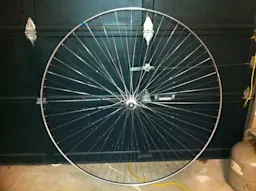
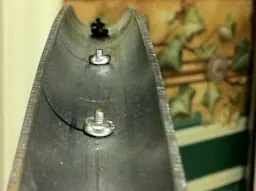
A: The biggest challenge was building the wheel. It had to be strong enough to support the weight of the rider, as well as be able to survive the bumps on the surface it is riding on. After cutting the tubing lengthwise and forming it around a banquet hall table, we had a rim. The spokes are actually two 12 inch spokes that are joined together using an extra-long spoke nipple. The bending of the backbone was difficult in achieving a consistent radius. The hub was an old unicycle hub that was cut and stretched 8 inches. 18 extra holes per side were drilled between the existing 18 holes on the hub flanges to allow for more spokes to support the weight of the rider. The frame was MIG welded using 0.030 inch wire. To install the rubber tire we used three very old wheel chair rubber tires, and had to fabricate a special screw clamp that was able to draw the internal 10 gauge wire in the rubber tire tight. One of the biggest hurdles was overcoming the fear of once it's built, we would have to test ride it. And that could lead to serious injuries or worse, if we fell off from such a height. After a lot of practicing we can ride our Penny Farthing safety.
Q: Speaking of test riding, how do you climb aboard and disembark (besides grabbing the nearest tree branch)?
A: Mounting and dismounting is actually very challenging! My father who is 76 now, struggles with getting on/off as his flexibility is limited now. He now uses a small step stool to assist in the process with some extra support coming from me to help him get going and dismounting. I am able to mount and dismount on my own. The process involves a kind of haphazard attempt to ride a huge scooter! It starts by grabbing a hold of the handlebars with both hands. Then getting a bit of a running start to create a forward momentum which is key! That momentum creates a gyroscopic force which helps stabilize the whole Penny Farthing wheel and minimizing it from tipping over left or right. Then putting one leg up on the rear peg and pushing yourself forward a couple of times to maintain your speed. Followed by a quick & perfectly timed upward launch of your body, with a tippy toe stretch of your right foot supported by the peg, to barely get over your body up and over and onto the saddle and have your left foot to come in contact with the left pedal on the downward stroke in order to maintain help your forward momentum. And lastly pulling your right leg off the peg and catching the right pedal on the down stroke. And away you go! Getting off is basically the same in reverse! It involves a long blind tippy toe stretch backwards of your dominant leg to find the peg, and quickly lift your body off the saddle while the penny farthing is still rolling forward so you don't fall over. Followed by a quick dismount to the ground.
Q: If you had to build it again, what would you do differently?
A: We would have used a thicker wall, and larger diameter tubing for the backbone of the Penny Farthing.
Q: Which Princess Auto location do you visit most?
A: Scarborough, ON