Store selector: No store selected

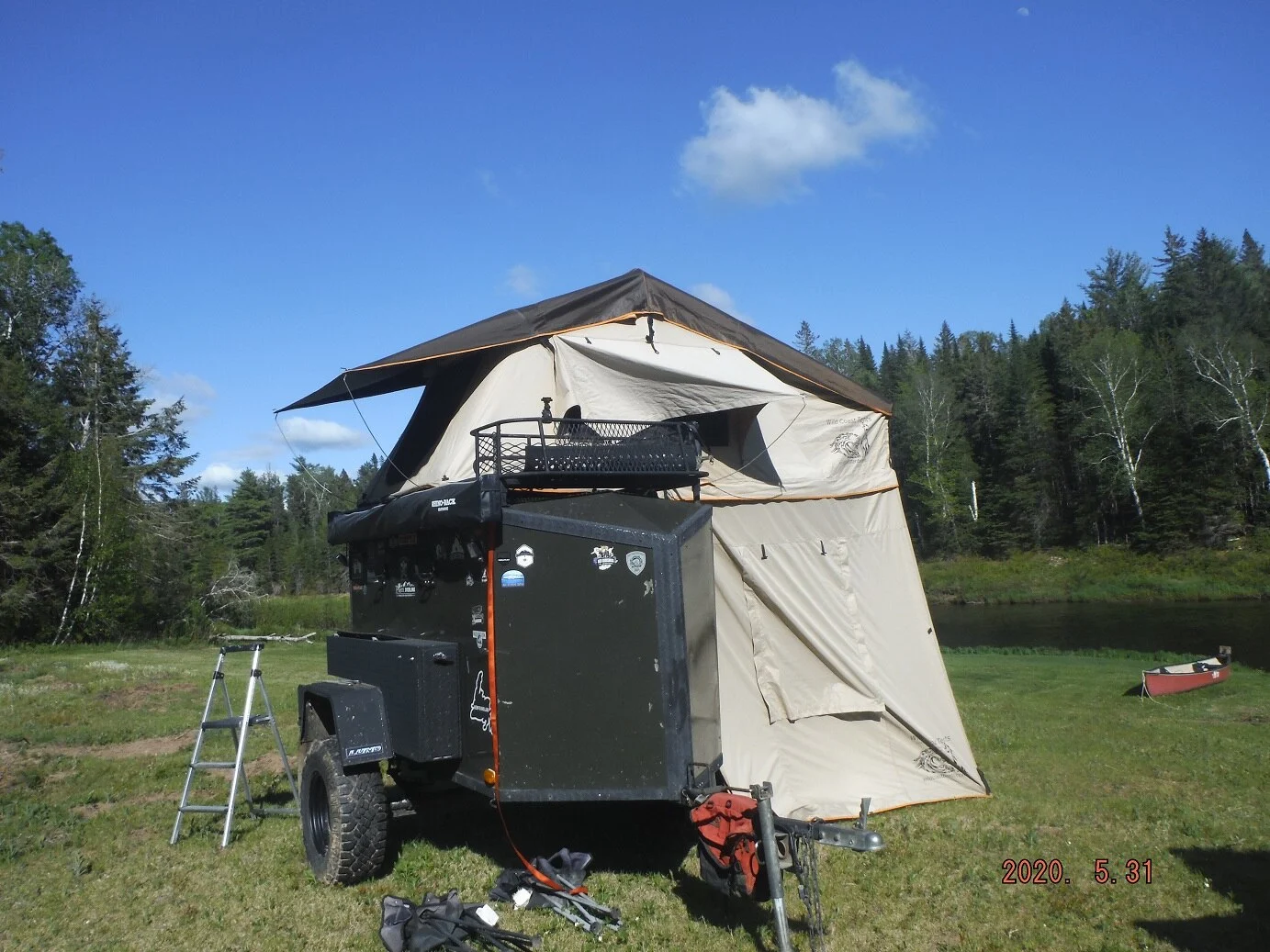
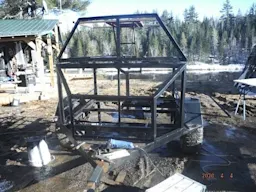
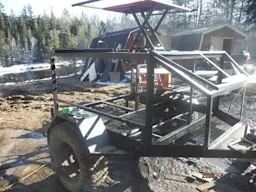
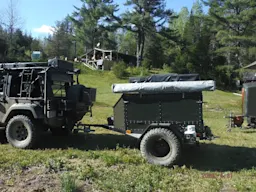
Tell us about yourself:“I work as a welding/ refinery equipment inspector, I do a fair bit of welding and building things one can’t easily buy, Jeep and off road modification and such. I built a trailer previous to this, but it turned out to be a little too big for tight off-road trails (the first photo shows the previous trailer and what the tent and awning looked like when set up). I decided to make a new trailer that was more compact and easier to access the components for camping, without having to crawl inside and bring stuff out and set up tables and such for the stove or BBQ.”
Off-road campers certainly exist, but not everyone can afford buying one. Dave’s trailer is a great example of careful designing and ingenuity. The many built-in features go a long way to make “roughing it” a little more pleasant when you travel off the beaten path.
Terrific project, Dave! Thanks for sharing it with us!
What is it? It’s a compact camping trailer that can be towed where the Jeep can go. The main objective of this trailer is quick and easy set up and take down. The stove, BBQ and fridge are all on drawer slides to easily take out for use and to put away.
The panel on the left side is attached with weld-on hinges, and slides off to become a coffee table or extra kitchen table, as the legs are adjustable (saving you the trouble of bringing a folding table). The other side folds down to become the kitchen prep area; it has a stainless steel tabletop for easy clean up. The oven/stove combo slides out from its space and rotates to either face out or sideways. I used drawer slides and a boat seat swivel to do this. The other drawers are for storage and such with the bottom one having a collapsible sink. The water pump and a 60-litre water tank inside means plenty of water for an extended trip to the bush (hot and cold running water was a must, according to the wife). The trailer has two 5 lb propane tanks with custom-made holders.
What is the main power source for your project? (e.g. electric motor, gas engine etc.) A 130 amp-hour deep cycle battery for lights and fridge power.
How do you control your project? (e.g. hydraulic control valve(s), electric switches etc.) Two sets of three toggle switches run the internal and external lights and water pump.
What components are used to perform the work for your project? (e.g. hydraulic cylinder(s), hydraulic motor(s), sprockets, pulleys etc.) There is a hydraulic lift cart retrofitted to raise the tent awning.
What design/build challenges were overcome? Several challenges were run into; the placement of the BBQ, hot water heater and building the support system to hold the lift cart.
By far the biggest challenge was figuring out how to raise the tent platform so the awning and tent are high enough to walk under. My first thought was using 12V linear actuators, but 28-inch actuators are not cheap. Then I thought scissor jacks, but that didn't give me enough height. Then I saw the lift cart and the light bulb lit up. Cut the wheels off, modified the handle so it’s inside the trailer, and welded a platform to the top table. I wanted to make it so it was not noticeable unless the tent was lifted.
The other big challenge I was looking at was the suspension. The trailer only weighs around 700 lbs loaded, but I used a 3,500 lb axle and springs because I bent a couple of 2,000 lb axles on my last trailer going off-road. I didn’t want the springs to be too stiff for a light trailer, so I removed one leaf from each side for softening the ride (otherwise a bump on the highway would cause the trailer to bounce). That turned out to be a little too soft when doing some trial runs over obstacles. I went online and found that Princess Auto sells the 1,000 lb coil helper springs; they fit perfectly. Now the trailer has the first couple of inches of soft travel, but then anymore and the coils engage making it stiffer when you go over a drop. It worked out very nicely.
If you had to build it again, what would you do differently? I would give myself a bigger tolerance on the doors and drawers. We have used it twice so far for camping, but I have test drove it over off road conditions before to make sure it would hold up. The next one I build, I will put electric brakes on, not for highway but for navigating step muddy hills. Instead of using 1-inch angle iron for the doors, I would use two pieces of flat bar stitched together to make a "T": this way when closed the door frames would overlap the frame so it would be a nicer, cleaner finish.
Which Princess Auto location do you visit most? Fredericton, New Brunswick