Store selector: No store selected

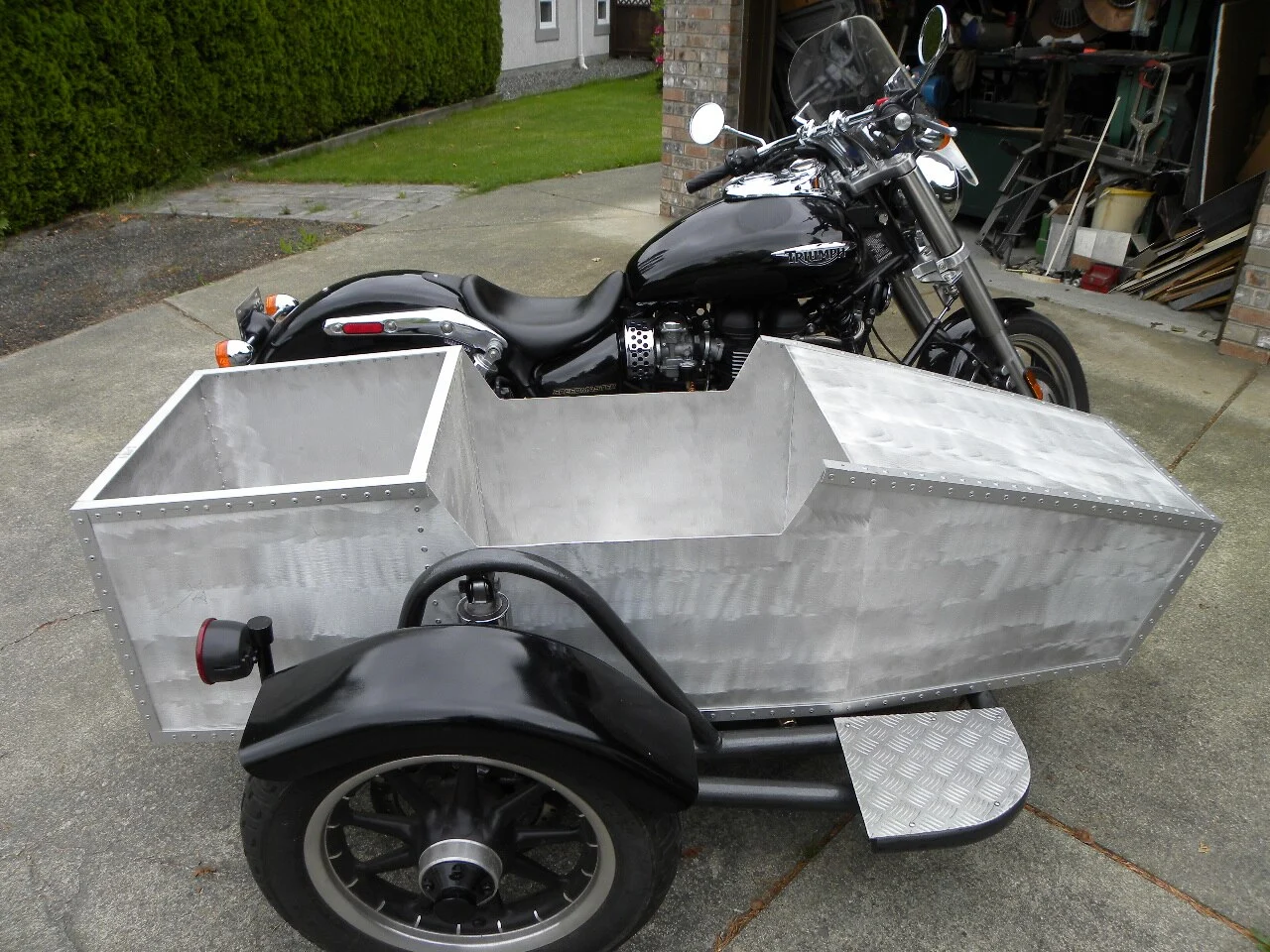
“Mostly retired now. I am a designer and manufacturing goldsmith/ gemologist. I have built most of the tools I needed for rolling, burnout and casting metals for the past 52 years. I am now a fossil wanting to play with my motorcycle. Don't build something like this unless you have a lot of time to talk to people every place you stop.”
The sidecar has an interesting history. The invention of the roller chain in 1880 led to the motorizing of the popular “safety bicycle” (featuring same-sized wheels), which later evolved into the motorcycle. In 1893, a French newspaper pitched a contest offering a prize for the best means to transport a passenger comfortably. Three concepts emerged: the forecar, the trailer-car and the sidecar.
The forecar placed the passenger in front between 2 wheels, while the rear driver sat over one. The problem was that the passenger took the brunt of any collision. The trailer-car was pulled behind the motorized bicycle, using an elevated draw bar attached to the bicycle frame (usually under the seat). But the passenger was on the receiving end of all the exhaust smoke, noise, and whatever the rear tire kicked up.
The winning concept was the sidecar, which allowed the passenger to sit next to the driver. Frames evolved from basic two-point attachments (which had the tendency to suddenly detach), to three and four-point attachments with leaf spring suspension. A patented design from 1913 even featured a pivoting chassis that allowed the sidecar to lean with the motorcycle during turns - the grandfather of the Flxi-Flyer and Equa-Lean trademarked designs.
Ray decided to build himself a versatile sidecar for transporting items and the occasional passenger. Lessons learned from a first build helped him improve the design on his second. While building it had its share of challenges, learning to turn with it was, no doubt, another thing to master. From what we read here, looks like he’s figured it out quite well!
Nice looking sidecar, Ray! Thanks for sharing your project with us!
Q: What is it?
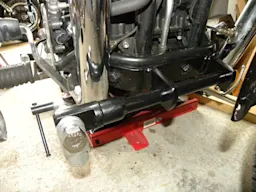
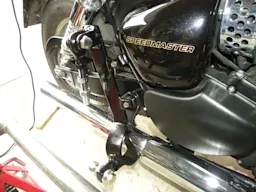
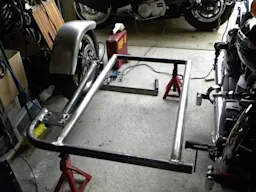
A: It is a tube and welded frame structure with a single axle, suspension and wheel that fastens to the side of a motorcycle. A sub-frame with connectors is built to fasten to the motorcycle and join the sidecar to the bike. I wanted to make my motorcycle more practical and fun.
Q: What is it used for?
A: It makes the rig much more useful as my everyday vehicle. Carries my groceries, extra gas, and camping gear, whatever I need to carry. I am now building a passenger set-up, built from aluminum plate and using a Princess Auto air riveter. I want it to look like part of a WW2 fighter plane. Bare metal with British decals.
A: It gives great versatility to the use of the motorcycle, either in load or passenger carrying. I mainly have an aluminum lock-box as the "tub" so I can carry my groceries, rain suit, tools, extra gas or whatever. I ride all year (extra bonus) it does not fall over in the snow or ice conditions.
Q: What is the main power source for your project? (e.g. electric motor, gas engine etc.)
A: 2009 Triumph Speedmaster with a 68 HP 865cc gas engine.
Q: How long have you been making these cuff bracelets?
A: The scenery pieces are relatively new (somewhere between 4 and 6 years ago). The layered pieces all tend to be labour intensive. Each cuff bracelet takes about 3-1/2 to 4 hours each. There are many variations to this kind of scenery: there can be winter scenes, summer, fall or spring.
Q: How do you control your project? (e.g. hydraulic control valve(s), electric switches etc.)
A: Electric switched for added lights, both rear stop and extra driving front light. Hydraulic control valve to balance the sidecars disc brake with the motorcycle rear brake. A "car" proportioning brake valve did not reduce the pressure enough.
Q: What components are used to perform the work for your project? (e.g. hydraulic cylinder(s), hydraulic motor(s), sprockets, pulleys etc.)
A: All parts are from "PA": electric band saw, drill press, hydraulic pipe bender, mig welder, hand grinder, pillow block bearings, rod ends, LED lights, fender, adjustable line throttle valve (for the brakes), pneumatic riveter, and paint. The connectors between the bike and sidecar are all ball joints. The swing arm suspension moves on 1 inch housed bearings.
Q: What design/build challenges were overcome?
A: I knew nothing before the build - I Googled and found all the information on the web, (a little bit from many sites). To have the bike and sidecar move down the road in a straight line and then stop in a straight line took some understanding of geometry. Finding the correct lead for the sidecar wheel to be ahead of the motorcycle rear wheel was trial and error. Bending the heavy wall tubing with my PA hydraulic bender was "fun".
A: I fabricated every piece, I turned the axle for the sidecar wheel on my little compact lathe and hand threaded for the crown nut, bent all the tubing using a 10 ton Princess hydraulic press and did all the welding. I engineered the subframe for the bike, connections between the bike and sidecar, swing axle for the sidecar wheel, adding sidecar brakes, position of third wheel along with camber and castor. I set-up a disc brake on the sidecar wheel and had to put on one of Princess Auto hydraulic shut off valves (without it I made a sharp right turn when I put the rear brake on).
A: I still have to build the trunk lid and add the tractor seat I got from Langley Princess auto, mostly I will use the cargo box. I am right now adding a dual battery set-up for extra lights, GPS and electric heated clothing (vests, jackets, gloves and pants) - with three wheels I don't fall over in the snow.
Q: If you had to build it again, what would you do differently?
A: This is my second build, the first was a huge learning curve of geometry. Connections between the bike and sidecar improved a lot, and this sidecar has brakes. I tend to "overbuild" as my life is on the line out on the road and freeway. I know I could lighten some of the materials used but would I?
A: I’ve used it for a couple of years now and still cannot believe that I hit the geometric "sweet" spot from low speed to freeway speed +. I did add a steering damper that corrected a slight wobble at certain speeds. Turning can be an issue; left turns are great, right turns you can fly the sidecar if not careful - this is where the geometry and set-up comes into play. I learned slowly and now I am up to all the speed I wish.
Q: Which Princess Auto location do you visit most?
A: Langley, BC