Store selector: No store selected

"I am an instructor at the Southern Alberta Institute of Technology and I teach Heavy Duty Mechanics. In my spare time I am a hobby machinist and I like to build things like small steam engines."
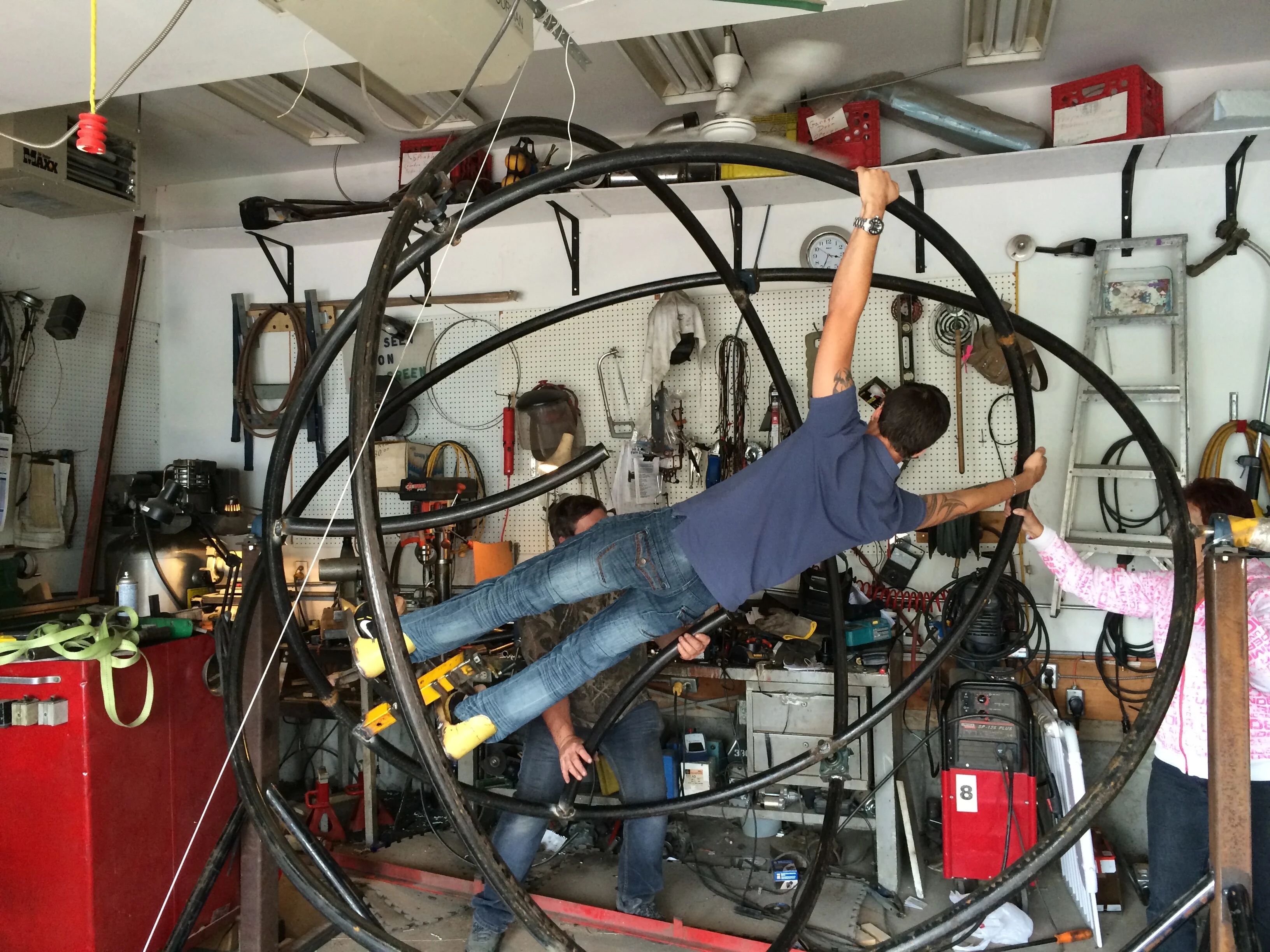
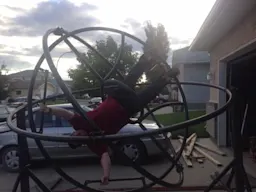
Pilots and astronauts train with them. They were a familiar piece of gym equipment during the 1980's. Today, it's a popular ride at fairs and events. The human gyroscope - also known as an "Aerotrim" (if you want to talk fancy) - was actually invented by a doctor with a bad back, figuring the topsy-turvy movement would provide pain relief and realign his spinal column. Early patents of these machines go as far back as 1907, and the first designs were rectangular in shape. The round version we know today only appeared around the 1960's. Don built one for the fun of it, and even brought it to class to let his students try it out. If you already enjoy the twists, turns and corkscrews of a roller coaster, or the inertia of a pendulum ride, then this is right up your alley.
Great project, Don! Thanks for sharing it with us!
See it in actionhere and here
Q: What is it?
A: It's a gyroscopic ride where you are strapped in by your ankles and hang on to overhead handles. Then the circles are released and body motion will spin you in three dimensions. I saw a picture of one and thought it would be a fun thing for my kids and the neighborhood kids to ride.
Q: What is the main power source for your project? (e.g. electric motor, gas engine etc.)
A: Body motion. This device is human powered, it just uses inertia.
Q: How do you control your project? (e.g. hydraulic control valve(s), electric switches etc.)
A: Shifting body weight to move or accelerate and a lock device to stop it / hold in position for mounting and dismounting.
Q: What components are used to perform the work for your project? (e.g. hydraulic cylinder(s), hydraulic motor(s), sprockets, pulleys etc.)
A: Just three circles mounted on pillow block bearings.
Q: What design/build challenges were overcome?
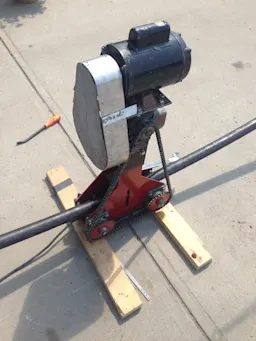
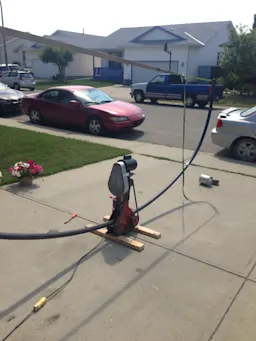
A: Math, geometry, welding and building a pipe rolling machine to roll the circles out of 1/2 inch water pipe. The pipe roller is homemade and was tough engineering that had about 4 redo's before working well. It was slow going to roll a 21 foot pipe into a half circle. It took about 5.5 hours per pipe times 6 to make three full circles. Once I had hauled it to a few events it became apparent that it needed its own trailer. I acquired a tent trailer that was old and rotten and stripped it down and mounted the gyroscope, put on decking and built out riggers so that it is stable in use. The trailer has a nose wheel with detachable handle so it can be maneuvered around into tight spots without the tow vehicle, and when using the tongue jack the outriggers can be put in place.
Q: If you had to build it again, what would you do differently?
A: This is one of the best builds I have done in that it worked very well first time with no changes, just some additions. If I had to start over, I'd have a commercial company bend the pipe and have bolt together circles. I would also build an assembly jig for welding it together.
Q: Which Princess Auto location do you visit most?
A: Calgary south, AB