Store selector: No store selected

Tell us about yourself:“I am a retired shop teacher and have enjoyed woodworking, metal working and all things mechanical all my life.”
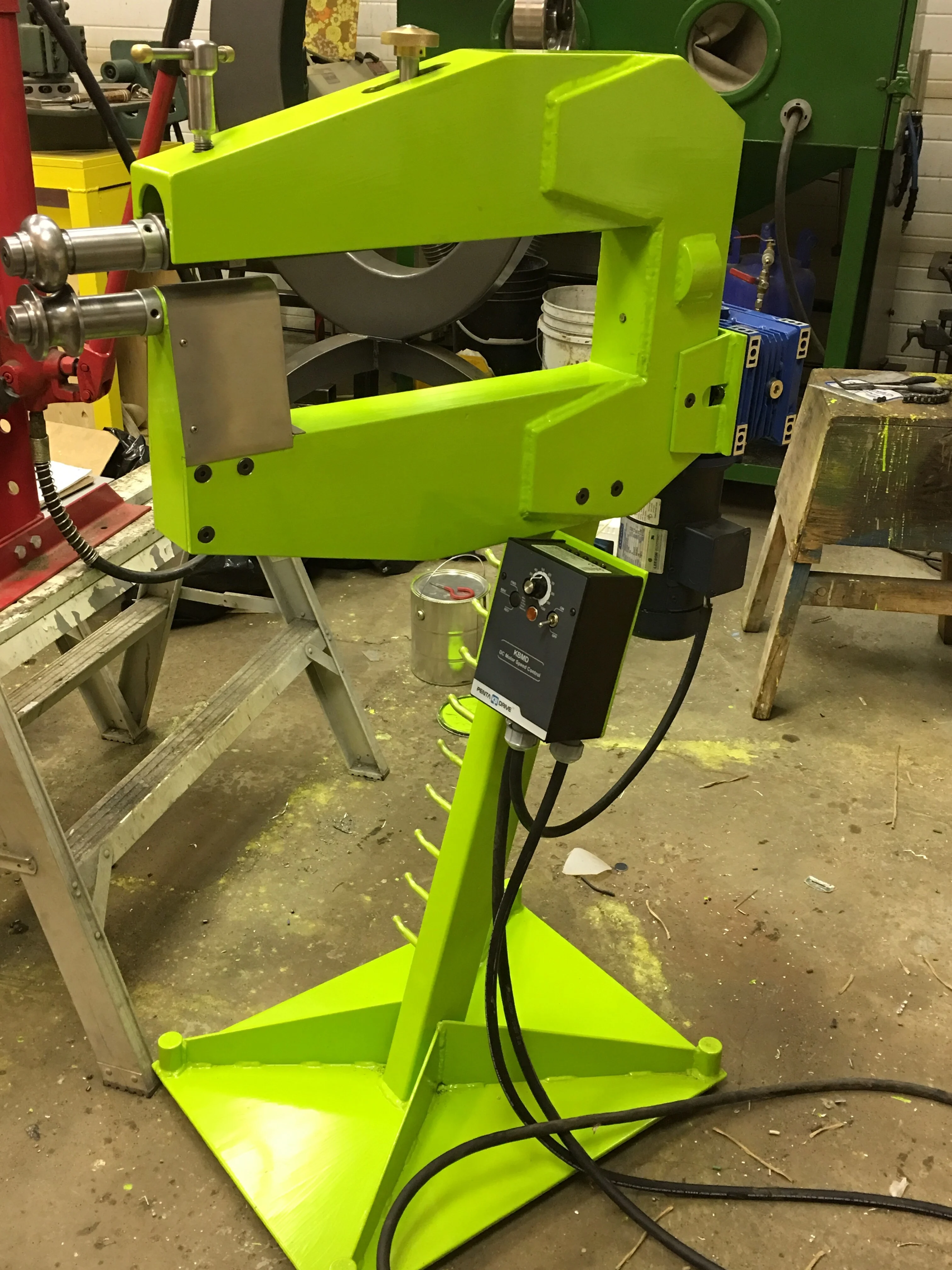
A bead roller is a very versatile metal working tool; it’s used to strengthen sheet metal, or shape and form custom pieces for vehicle and aircraft restorations, HVAC work and decorative projects. Len built one to help with the restoration of his grandfather’s tractor, because sometimes it’s better (not to mention cheaper) to fabricate your own custom pieces, rather than scour the land searching for those hard-to-find original parts!
Excellent project, Len! Thanks for sharing it with us!
What is it used for?
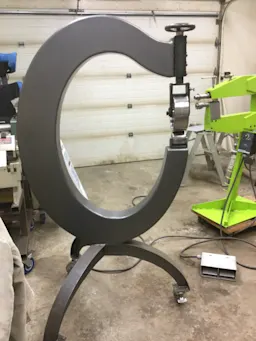
For forming beads and bends in sheet metal. The need for the bead roller arose when I restored my grandfather’s 1928 McCormick Deering tractor. I did a ground up restoration on it mechanically, and then had to make all new sheet metal parts including the fuel tanks. I built the English wheel first then the bead roller. Before starting the bead roller, I did a lot of research and liked a lot of the features on a machine built and sold by Lazze Metal Shaping out of California. I bought my first set of dies from them, and have since made my own dies out of 4140 steel using their design (the die design is unique in that you can flip them to get different offsets). I plan to buy a few more of the more complex dies that would be difficult to make on my lathe.
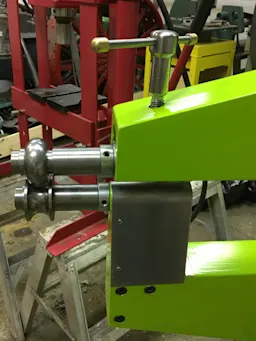
I called my bead roller the Gremlin because the upper shaft is made from a 1973 Gremlin 3-speed standard transmission input shaft (and thus the colour), because what other colour could a gremlin be? I used the shaft because it had a splined end on it, which allows the top die shaft to be slid back and forth to accommodate different offsets from the bottom die. The large brass knob on the top locks the in/out position of the top shaft.
The two shafts rotate in opposite directions and the lower shaft is offset. The top shaft is able to slide in and out to align with different lower dies.
The sheet metal I used on the tractor was 18-gauge cold rolled and the bead roller handled it no problem. For running beads in heavier metal, I move the dies all the way in putting the spacers on the outside to reduce the stress on the shafts.
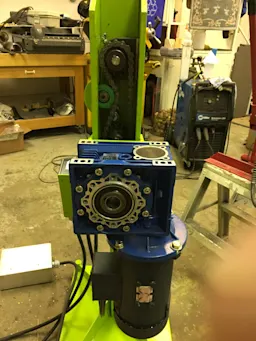
What is the main power source for your project? (e.g. electric motor, gas engine etc.) The unit is powered by a 1/2 HP 90 volt DC motor and controlled by a variable speed DC motor controller. The motor is coupled to a 100:1 worm drive reducer so it has lots of torque.
How do you control your project? (e.g. hydraulic control valve(s), electric switches etc.) Variable speed DC drive with foot controlled forward reverse.
What components are used to perform the work for your project? (e.g. hydraulic cylinder(s), hydraulic motor(s), sprockets, pulleys etc.) Two forming dies mounted on the upper and lower shafts do the work.
What design/build challenges were overcome? The biggest challenge was designing and building the lower die shaft. I had to keep it very low in profile so it would not interfere with metal running through the dies. I ended up using bronze bushings pressed into a thin walled housing. The lower shaft is driven by a timing belt instead of a chain to maintain the low profile. So far the unit has worked really well and don’t think I would make any changes if I were to build it again.
I couldn’t find a forward/reverse foot pedal, so I built my own which turned out to be my first attempt at TIG welding on aluminum.
If you had to build it again, what would you do differently? Nothing, works great.
Which Princess Auto location do you visit most? South Edmonton, AB