Store selector: No store selected

"I'm originally from New Zealand, and now retired from the automotive business which I owned and ran that was dedicated to servicing and restoring old British Sports Cars. Amazingly, I have continued doing the same thing as a hobby, and have recently finished restoring a very early (150th production car) Austin Healey 100 which was a concours gold winner at the national meet in Gettysburg this summer. I also own a 1965 Morris Mini Cooper "S", a 1962 Mini Estate, a 1970 MGBGT and a Mitsubishi 3000 GT VR4. My wife refers to it as a disease :-) ... My other interests are travel and cottaging."
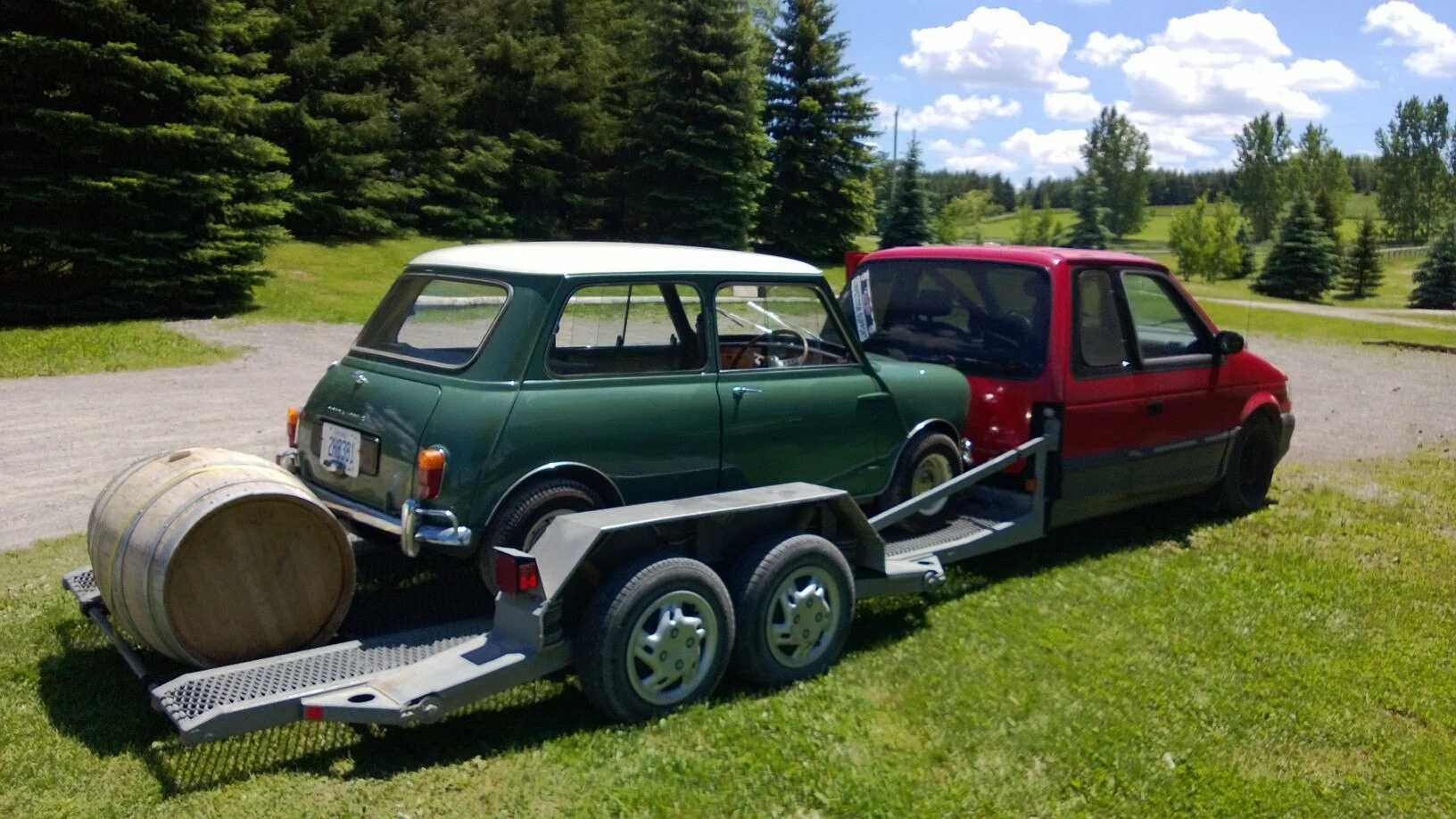
When you spend endless hours restoring a vehicle, the last thing you want is to damage it during transport. Not content with using tow trucks and tow-behind flatbed trailers, Michael opted to build his own transporter by fusing a minivan with a flatbed trailer of his own design. This unusual hybrid has exceeded his expectations, and is used for hauling more than his vintage automobiles.
Well done, Michael! Thank you for sharing your project with us!
Q: What is it?
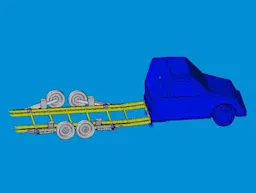
A: Light duty car transporter built by modifying a 1994 Dodge Caravan. I have never felt really safe hauling a classic car around on or in a trailer. Everything is fine when well, everything is fine, but emergency braking, slippery conditions or problems like a blown tire or having to swerve to avoid something can create some serious "pucker" moments. I also used to look at your typical "flat bed" type of vehicle and think how difficult it was to lift the load above the rear suspension where, if a front drive was used, the load could be carried close to the ground between the rear wheels. I once saw a Cadillac Eldorado modified to carry a midget racer (really) and thought the idea was great even if the execution wasn't that great in the case of the Eldora-do. I had also seen race car transporters in Europe built on front drive Renaults and Citroens, so mine was definitely not an original concept. When Chrysler came out with the Dodge Caravan in a 6 cylinder I realized that the only way I was going to find out if the idea would work was build one. I taught myself haw to use a CAD program to sort out the details and set to work.
Q: What is it used for?
A: Transporting cars from my very small collection of classic British cars.
Q: What is the main power source for your project? (e.g. electric motor, gas engine etc.)
A: The parent vehicle's 3.3 litre gasoline V6. The Dodge Caravan was selected for a number of reasons. At the time, mid 1990's, the Dodge Caravan was the king of minivans. They had been in production for about 15 years, and most of the bugs of this new class of vehicle had been sorted out. The 604 electronically controlled transmission was still fairly new and having some issues, but a lot of good quality aftermarket parts were available which turned that somewhat unreliable product into a solid workhorse. The fact that the Dodge Caravan had side windows that were the same height for the length of the van and a solid 3.3 liter engine were the most important.
Q: How do you control your project? (e.g. hydraulic control valve(s), electric switches etc.)
A: 12 VDC electric switches, through relays, operate solenoid valves to pneumatically adjust the ride height of the loaded vehicle.
Q: What components are used to perform the work for your project? (e.g. hydraulic cylinder(s), hydraulic motor(s), sprockets, pulleys etc.)
A: Small 12VDC compressor, 12VDC solenoid valves, 12VDC relays, air springs.
Q: What design/build challenges were overcome?
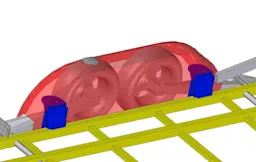
A: The biggest challenge was to design a suspension system which was narrow enough to fit outside the load deck but maintain a reasonable vehicle overall width. The rear suspension uses "air springs" and when they are deflated the back of the deck goes down to the ground. Sounds very simple but getting the geometry correct was the challenge. It works very well and, for convertibles where there is not the need to open the doors of the loaded car, you can drive the car on. In most instances however I use a remote control electric winch located inside the cab of the vehicle just inside the opening rear hatch. I used heavy duty expanded steel for the deck surface which provides plenty of tire grip and plenty of locations to anchor tie downs. The entire rear deck assembly was hot dip galvanized after fabrication and the hollow frame members also serve as a compressed air reservoir (tank). Lots more information about the design on my blog here and here.
Q: If you had to build it again, what would you do differently?
A: Not very much. As you can read here.
Q: Which Princess Auto location do you visit most?
A: Newmarket, Ontario.