Store selector: No store selected

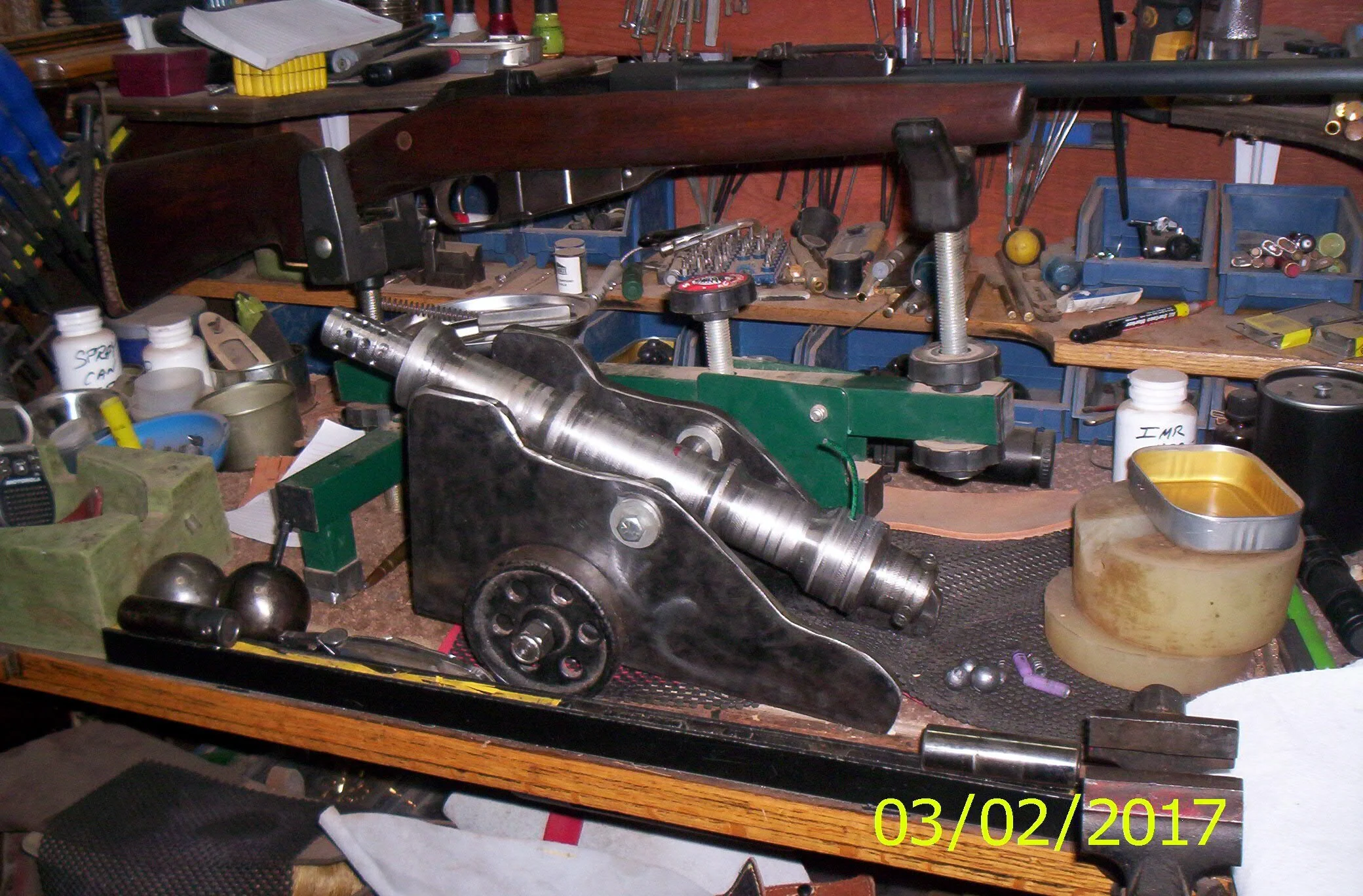
"I'm a semi-retired gunsmith, carpenter, mechanic, welder, electrician, boat builder, too many trades to talk about. I build guitars, houses, and fix my own cars. I build and try anything. Commission me for something and I'm sure I can do it.
Warning: If anyone who tries to make one, do testing with black power and increase the amount of powder starting with a low charge. I'm not promoting powder measurement so do it at your own risk. I started out with 40 grains, went to 60 grains then to 80 grains, and I will leave it at that, the rest is my secret how far I went with the charge. Even though I was sure of the integrity of the steel and my workmanship, SAFETY FIRST. This cannon was built solid with schedule 80 pipe one inside each other (3 walls of pipe) and larger pieces on the rear and muzzle end as with the rest of the build. Cannon mount was built with heavy steel, heavy steel wheels etc., to take the recoil."
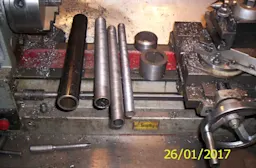
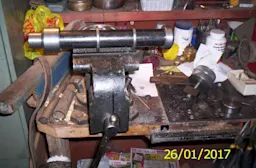
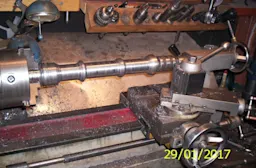
With an arsenal of fabricating skills at his disposal, Robert set out to make his own cannon from scratch. Some metal pipe, a little welding, lots of lathe work, drilling, grinding and polishing were all applied to shape recycled materials into an actual working cannon. The end result may be small, but after watching the video we can see that this little cannon packs a decent punch.
Nice craftsmanship, Robert! Thanks for sharing your project with us!
See it in actionhere
Q: What is it?
A: It's a homemade 50 calibre cannon made from recycled materials. I'm a gunsmith and I thought it would be a good thing to try. Took me about 60 hours to build it. I also cast my own lead ammunition.
Q: What is the main power source for your project? (e.g. electric motor, gas engine etc.)
A: The cannon used 80 grains of GOEX FF black powder during the tests. The cannon is loaded like any other black powder firearm. You put a specific amount of powder down the barrel, followed by a wad (I put some shredded cotton ball), followed by a round lead 50 calibre cast ball with a cotton patch in the mouth of the cannon (little bigger than the diameter of the lead ball). You push this down the barrel and tap it down so it fits, compressing the powder. The fuse is something like one in a fire cracker commercially made for rockets, cannons, etc. The fuse goes in the rear hole (into the barrel) before you put the powder in. Then when you put the power in, it sits on the fuse for direct contact. The more powder, the further the ball will go. The only limit is the strength of the cannon and steel, and safety comes first.
Q: How do you control your project? (e.g. hydraulic control valve(s), electric switches etc.)
A: I have straps that secure the cannon to the table top in my outside shooting shelter. There are two eye hooks on both sides of the table; straps go over the cannon and attach to the eye hooks on the other side. The straps can be tightened down by the wrenching lever. The kick back only happens when there is enough powder to push the weight of the steel that is on wheels - that's the reverse thrust of the powder firing. I also use this securing technique when test-shooting a rifle in a stand, because I pull the trigger with a long cord so my hands do not touch the firearm when testing. In the end of the video, the last shot you can see the cannon come back and you can see the red straps securing the roll of the cannon.
Q: What design/build challenges were overcome?
A: Never had a problem but I like to always work around difficulties. When you have the tools, you can do almost anything. I pretty much work out of my head (no schematic), with just a visual in mind of what I want to build. I made it very strong. 3 pieces of schedule 80 pipe, each one turned on the lathe to fit into the other one. This cannon can take a lot of pressure. Lots of precision work when into this. Not just a toy as I am a gunsmith and safety is always first. My farthest test target was 75 feet, so when I eyed the cannon to hit the red mark, I did not compensate for distance and height - I just aimed at the red mark. Looking at the results (not too far off the mark) I would guess the lead ball fired to 75 feet with the amount of powder I put in the barrel (I did not overload it). The lead ball could probably go at least 100 to 200 yards, no problem. Most muzzleloader rifles can do that. The other point to keep in mind is the longer the barrel, and the more pressure from the powder on the ball, the further it will go. So with a 4 inch barrel I might have just made the 75 foot mark. My barrel was 18 inches plus the cannon, so about 22 inch travel of powder pressure. Old muzzleloaders were about 28 inch barrel (just to give you an idea of firearms). The mount for the cannon was made from 3/8 inch plate steel using a Powerfist portable hand circular hacksaw, and mini grinders with cut-off and sanding wheels. Bearings were set into the steel for easy raising and lowering of the barrel. If you look closely at one of the pictures of the cannon's back part (with 4 socket head screws in it), the whole back cap unscrews to clean out the barrel. Way back in the first big cannons there was no cap at the end. They ran a mop down the barrel bore to make sure it was clear and all the crap was out.
Q: If you had to build it again, what would you do differently?
A: Nothing except built a bigger one, but this one is an ideal size.
Q: Which Princess Auto location do you visit most?
A: Charlottetown, PEI