Store selector: No store selected

"I'm retired and living in Coombs, BC. I have a small machine shop and I love metal fabrication and welding, and also I like building hot rods. One of the other things I love to do is being in the back country, which is the reason I have an ATV in the first place. I spend a lot of time riding in the mountains."
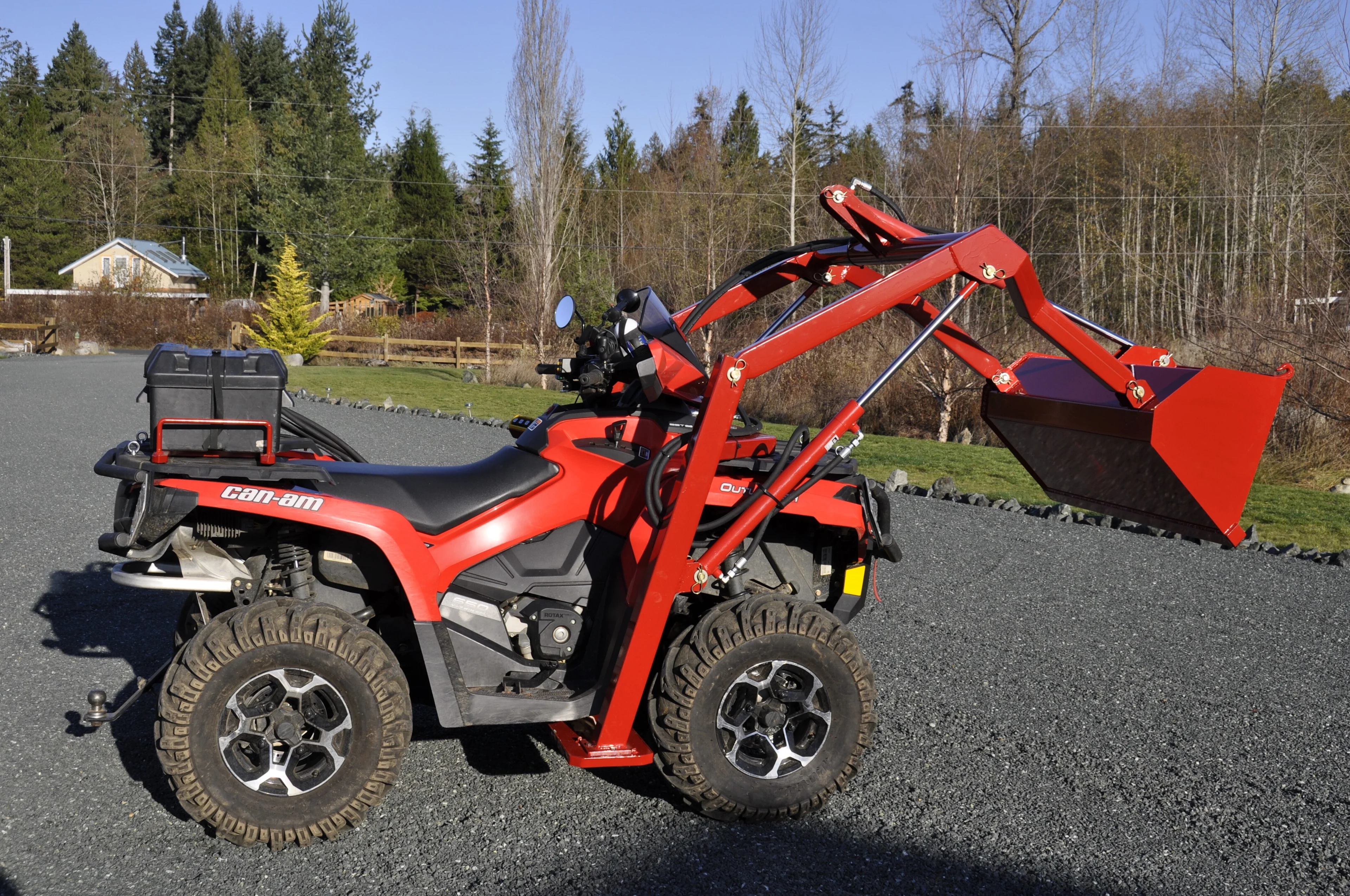
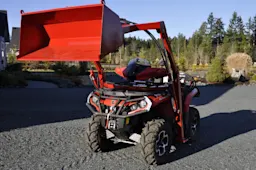
For some, an ATV is a recreational vehicle. For others, it's a workhorse. Sure, an ATV can tow a small trailer, sprayer or any other small implement... but that's all at the back of the machine. Apart from a front-mounted blade (or even a snowblower, as we've featured before), what else can you put up front? Kevin decided to build himself a useful attachment for his ATV that turned out better than he imagined.
Great project, Kevin! Thanks for sharing it with us!
Q: What is it used for?
A: To move anything that will go into the bucket. I live on an acreage and I needed a tractor for moving dirt, rocks, manure...anything else that was heavy to move. Since I had a brand new ATV, I didn't see any reason why something like this wouldn't work. I had never seen or built anything like this before, and all during the building process I was nervous - wondering if all this time work and money would create a loader that would do what I was expecting, because I really didn't know for sure.
Q: What is the main power source for your project? (e.g. electric motor, gas engine etc.)
A: It uses a combination Electric-Hydraulic source.
Q: How do you control your project? (e.g. hydraulic control valve(s), electric switches etc.)
A: Electric switches controlling the hydraulic valves.
Q: What components are used to perform the work for your project? (e.g. hydraulic cylinder(s), hydraulic motor(s), sprockets, pulleys etc.)
A: A double acting hydraulic power unit, and three 1-1/2 in. bore x 20 in. stroke hydraulic cylinders.
Q: What design/build challenges were overcome?
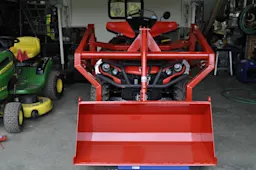
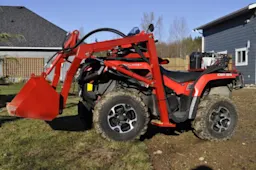
A: Size of the bucket, weight of the frame work and proper hydraulic unit to power it. I designed, built and painted this project myself. I started by building one complete arm out of two by fours before transferring it to steel, keeping in mind that I wanted the bucket to be able to lift five and a half feet high so I could load into the back of my one ton truck. Also had to design it for ease of putting the bucket on and off, which I did by building a wooden dolly at the right height. I just use the hydraulics, so no manual lifting is involved. When I started this project I didn't know anything about hydraulics, so the hydraulic expert in Victoria set this system up for me and made all the hoses once I gave him all the lengths. The first pump was faulty but was replaced with no problem. The hardest thing was trying to get the right bucket tilt angle at the extended and retracted position of the arms. I did drill tap and install grease nipples on all the joints.
Q: If you had to build it again, what would you do differently?
A: Nothing, really. I feel I put enough thought into it and it turned out even better than I had expected, thank God. The amount of weight it will lift with just me and the counter weight of the hydraulic motor and battery behind me is impressive (the pump and battery on the back deck weighs 100 lbs). I can put four hundred pounds in the bucket, stand beside the machine, and it will lift it no problem. The odd time I put five hundred or more pounds in the bucket, I used two or three 25 lb dumbbell weights bolted to my back receiver. The front suspension is completely locked out for this whole thing to work, and by doing that it really does feel like a tractor.
Q: Which Princess Auto location do you visit most?
A: Victoria BC