Store selector: No store selected

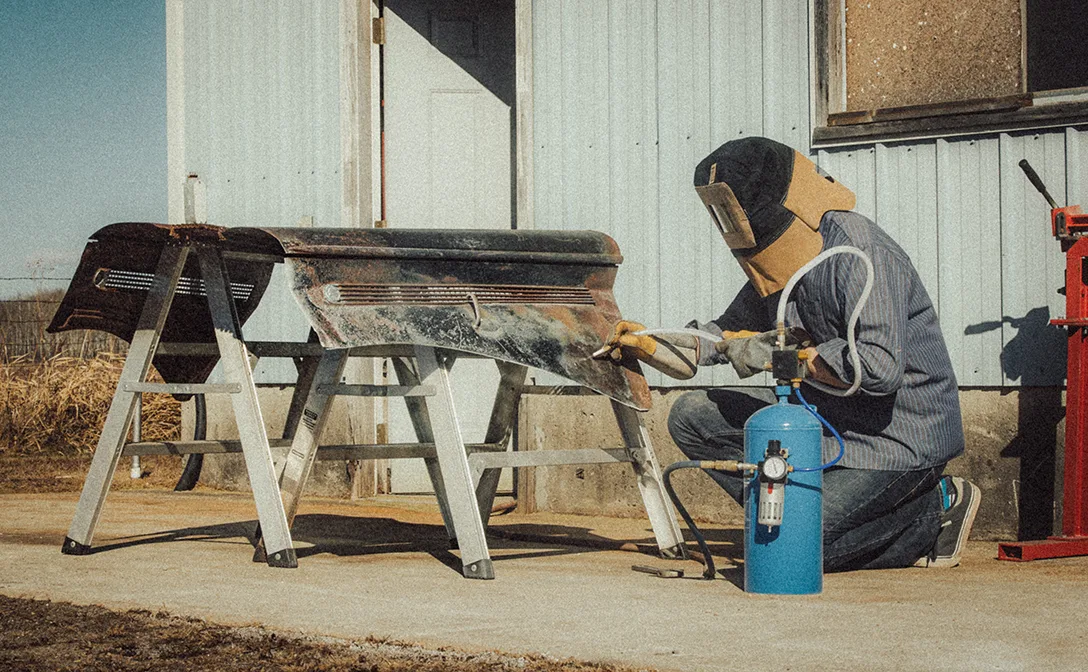
Soda blasting is a gentler, non-destructive, eco-friendly blasting method that uses sodium bicarbonate for cleaning and restoration tasks. It’s a versatile solution in various industries that delivers great results without damaging surfaces, making it ideal for removing paint, graffiti and rust.
Soda blasting uses sodium bicarbonate (baking soda) and compressed air to clean or strip surfaces. Baking soda is safe and non-toxic; unlike the dust created when silica sand breaks down, the dust from baking soda does not harm your lungs.
Baking soda is also water soluble, making it great for sensitive cleaning when restoring cars, cleaning food processing equipment, cleaning boat hulls, etc. It’s also effective at mold removal, soot remediation, post-fire restoration, and masonry cleaning while deodorizing and neutralizing surface rust.
Sodium bicarbonate produces a smooth, clean finish with no pitting or warping. Unlike silica sand, baking soda is non-hazardous, safeguarding both users and the environment.
Water soluble abrasive: Simplifies cleanup, ideal for cleaning food processing equipment.
Non-toxic: Eco-friendly and safe, perfect for masonry cleaning and historical restoration.
Neutralizes surface rust: prevents flash rusting, great for automotive restoration and boat hull cleaning.
Removes grease: Efficiently cleans industrial equipment and carbon buildup.
Works quickly: Speeds up graffiti and mold removal, and soot remediation.
Gentle on delicate surfaces: Suitable for etching glass, wood restoration, and line striping.
Soda blasting is effective for:
Paint and protective coating removal from car frames and parts.
Graffiti removal.
Boat hull cleaning.
Mold removal and fire restoration cleanup.
Food processing equipment cleaning.
Masonry cleaning and historical restoration.
Cleaning oil, carbon buildup, grease and grime on industrial machinery.
Wood restoration and gum removal.
To start soda blasting, you’ll need equipment designed for the task. Key components include:
Blast pot (the unit itself), blast hose and nozzle for precise media delivery. Large bags of soda bicarbonate for refilling.
Air compressor to supply adequate CFM for your blaster’s nozzle and pressure.
An in-line desiccant air dryer should be installed to prevent media clumping. Dry air is
absolutely
critical to any blasting operation especially when dealing with soda blasting.
Personal protective equipment (PPE): Eyes – face shield, safety goggles/glasses or blasting hood. Hands and forearms – gauntlet gloves. Ears – earplugs or earmuffs. Lungs – respirator mask.
Blasting cabinet for small projects, designed to manage dust and maintain visibility. Vacuums or dust collectors can help to draw the dust out of the cabinets, making the work area easier to see while blasting.
While sodium bicarbonate is non-toxic, airborne particles can cause respiratory issues if inhaled. Always use proper personal protective equipment (PPE):
Wear a respirator for blasting to protect against airborne debris.
Use a blasting hood to shield your face and upper body.
Wear blasting gloves and inspect them for wear to prevent skin exposure.
Follow OSHA guidelines for abrasive blasting to ensure a safe work environment.
Use tarps, plastic sheeting, or a blasting booth to control overspray. For outdoor jobs, set up barriers to protect plants and the area. After blasting, rinse surfaces with water to remove residue, especially on food processing equipment.
Effective containment and cleanup streamline your soda blasting projects:
Lay down plastic sheeting to catch spent media.
Use containment walls/curtains or negative air machines (air scrubbers) for indoor mold removal or post-fire restoration.
For professional applications, invest in a blasting booth or tent to enhance safety and efficiency.
Consider debris pickup services to simplify post-blast cleanup.
Soda blasting offers a gentle yet effective solution for precision cleaning and restoration.
It helps professionals who work with industrial equipment. It also benefits hobbyists restoring vintage cars. Many contractors use this method for removing graffiti.
This method protects surfaces and provides excellent results. With no damage to delicate surfaces, it’s the popular choice for etching glass, wood restoration, and more.